
Opinion | A New Pope Emerged… and so Did Ironies
VATICAN CITY – On May 8, 2024, when a plume of white smoke coiled into the Roman sky from the chimney of the Sistine Chapel, the world collectively gasped. No, it wasn’t a fire—it was the world’s most analog way of announcing new leadership: Habemus Papam. We have a pope.
In that dramatic ancient ritual, with puffs of smoke as a signal in the age of the iPhone, we caught the first whiff of the many ironies that swirl around the modern papacy like incense in a cathedral. With all eyes on Rome, here are a few of the contradictions that rise with the smoke.
Irony #1: The Vatican’s Very Offline Notification System
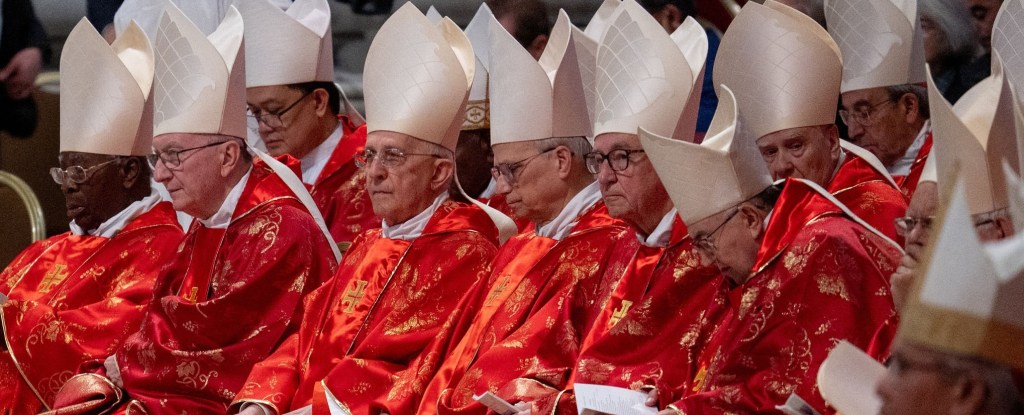
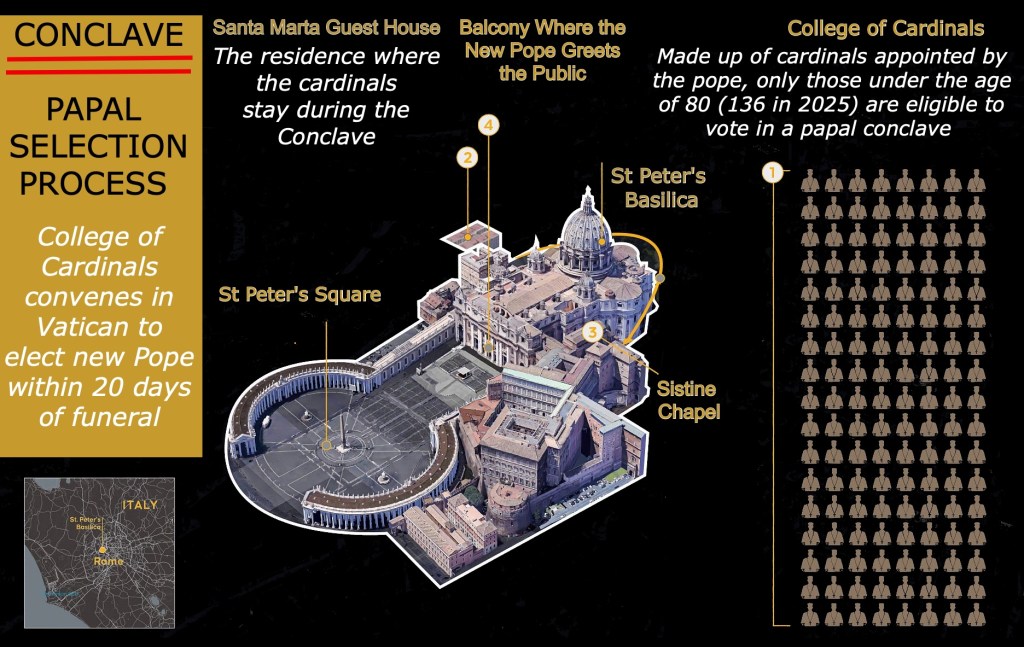
The Catholic Church has remained faithful to its centuries-old tradition of papal election. Upon the death of Pope Francis, the College of Cardinals gathered once again for the Conclave, held behind closed doors in the Sistine Chapel. Any cardinal under the age of 80 is eligible for consideration, but to emerge as pope, a candidate must secure a two-thirds majority—in 2025, that meant 89 out of 133 votes.
Modern conclaves typically last two to three days. Meanwhile, hundreds of thousands of the faithful camped in St. Peter’s Square, eyes set on a chimney, waiting for a wisp of smoke to reveal the Church’s future.
At a time when even your dog’s location pings your phone, the conclave, steeped in secrecies and traditions, still doesn’t trust text messages. No app. No livestream countdown. Just the chimney—white smoke for yes, black for no. It’s not exactly cutting edge, but in fairness, it never gets hacked.
Irony #2: The Most Secretive Event on Earth is a Global Spectacle
Papal conclaves are notoriously secretive affairs. The cardinals are literally locked in without cell phones—cum clave, with a key—until they reach a decision.
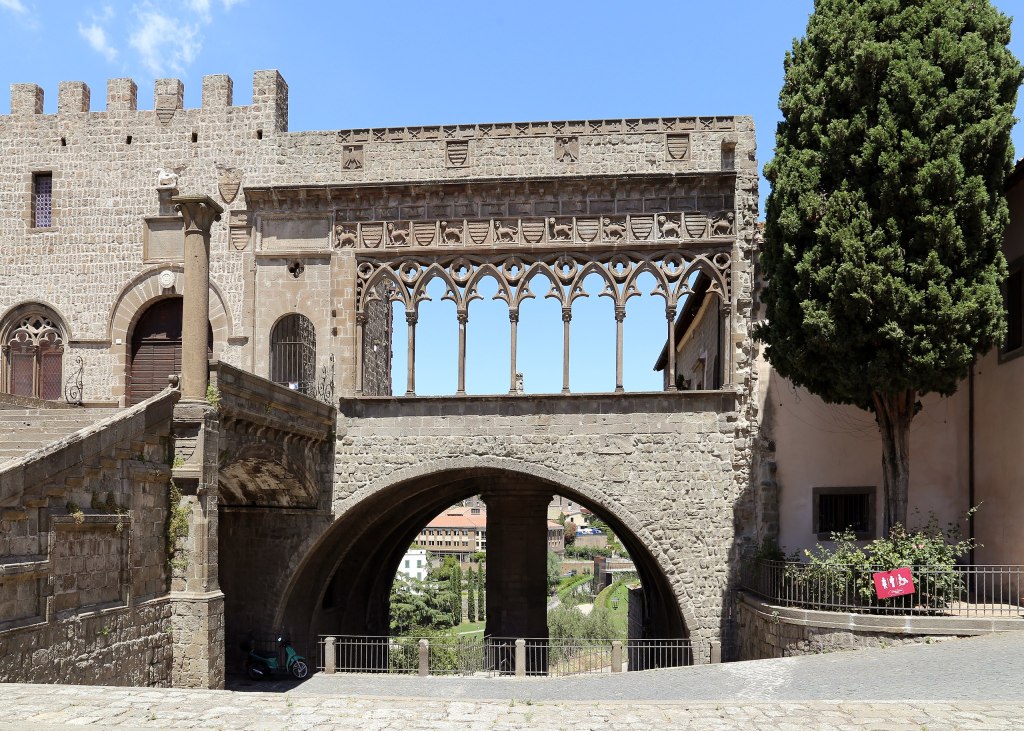
Historically, Papal elections haven’t always been in stealth mode. The James Bondesque tradition started amid the 3 year voting period in 1268 – 1271, the longest in Catholic history. The city of Viterbo, frustrated by the protracted deadlock among the cardinals, took drastic measures. They confined the cardinals within the Palazzo dei Papi, limited their meals to bread and water, and eventually removed the roof of the hall where deliberations were taking place, exposing the electors to the elements to pressure them into reaching a decision.
This extreme action led to the election of Teobaldo Visconti, neither a bishop nor a priest, as Pope Gregory X. In response to the ordeal, Gregory X instituted the papal bull Ubi Periculum in 1274, establishing formal procedures for future conclaves, including seclusion of the cardinals from both inside and outside, and regulated living conditions, to prevent such prolonged elections.
The papal conclave has since become the most secretive event on earth: isolated from the outside world, fortified with modern counter-surveillance tools to prevent any possible eavesdropping, and even encased in a Faraday cage during the 2013 Conclave to block electromagnetic signals. Comfort, however, wasn’t exactly top of mind. Until Pope John Paul II commissioned a guesthouse after the 1978 Conclave, cardinals were crammed into shared quarters, where wooden chairs with built-in chamber pots passed for bathroom accommodations. If nothing else, it was an efficient incentive to reach a speedy decision.
Fast forward to today: while the rooms and wooden potties have been upgraded, the silence and seclusion remain. No phones. No WiFi. Just prayer, politicking, and a lot of whispered Latin. On top of tightly controlled communication, voting, sleeping, and eating are also subject to strict sequestration. Even though food is no longer rationed, any items that might conceal secret messages, such as whole chickens or pies, are not permitted. Tablewares and napkins are carefully inspected; only clear glasses are allowed.
However, none of these efforts have stopped the world from obsessing over the process. Every detail, from a fluttering curtain and a yawning security guard to a tray of espresso delivered to the chapel, were watched and analyzed—globally. The conclave, despite moving in near total radio silence and secrecy, somehow commands more livestream hours than the Oscars.
Nor have these measures stopped individuals and institutions from trying to influence the election. CNN reports that the electors had been offered a book prior to conclave. This book, titled “The College of Cardinals Report” and crafted by conservatives, profiles around 40 potential papal candidates, detailing their views on key issues like same sex blessings, the ordination of female deacons, and contraception. The underlying message? Pick someone who’ll steer the Church away from Pope Francis’s progressive path, one that’s ruffled more than a few conservative feathers.
In conclusion: the conclave may be shut off to public view, but wide open to global scrutiny.
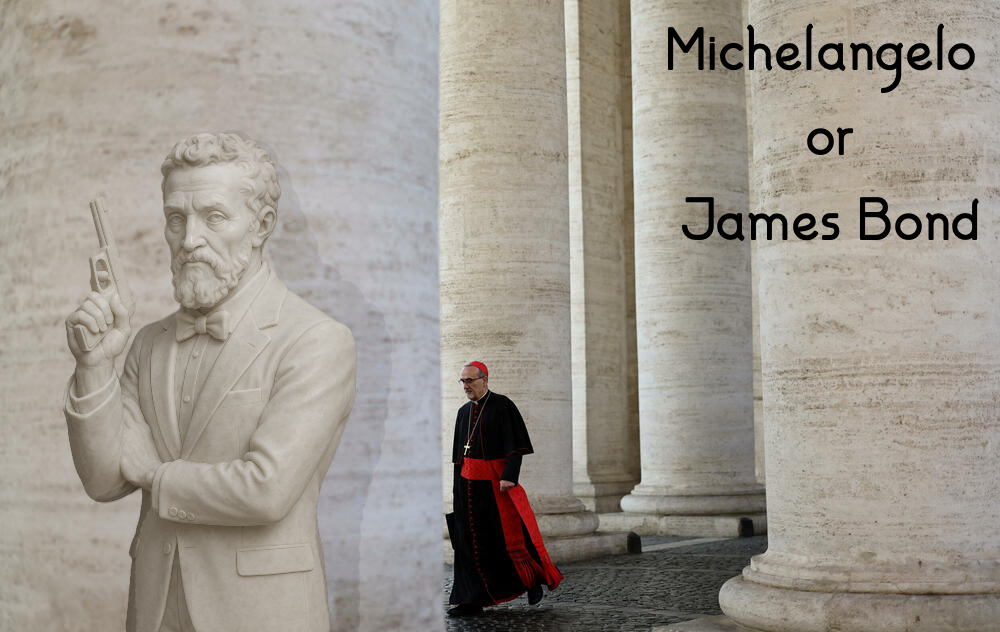
Irony #3: The Pope Has Supreme Power—But Reforming the Church is a Sisyphean Task
Once the smoke clears and the new pope emerges, he is hailed as the most powerful religious leader on earth. And it’s true: he is the supreme pontiff, the bishop of Rome, the successor of St. Peter, the leader of the world’s 1.4 billion Catholics, and in a technical sense, an absolute monarch.
So… what can he actually do?
Here’s the punchline: quite a lot…on paper. He can rewrite canon law, which governs the Church’s global operations, and appoint or remove bishops, thereby reshaping the Church’s leadership. He may issue encyclicals, or authoritative letters on doctrine and policy, on topics ranging from faith to the environment. While rarely exercised, he holds the right to speak infallibly, a power invoked only once in Catholic history. He can excommunicate individuals, call an ecumenical council like Vatican II (arguably the most significant reform in the Church history), and reorganize the Vatican’s internal structure, as Pope Francis notably did in 2022.
But here’s the catch: what he can do isn’t always what he can get done. He can not unilaterally override core doctrines or overturn established dogma, nor can he force local Churches to adopt reforms overnight. While many customs are not laws, they are deeply embedded expectations within Catholic identity, and they cannot be dismantled lightly. Additionally, he can not abruptly swerve in the opposite direction from his predecessor; his legitimacy relies on maintaining continuity and safeguarding the Church’s unity across centuries.
The Church is global, ancient, and deeply rooted in tradition. Shifting it is more like steering a glacier than flipping a switch. Last time it took 100 years to reverse the position held by the Church leadership; according to Dennis Doyle, Professor Emeritus of Religious Studies at the University of Dayton: “In 1864, Pius IX condemned the proposition that ‘the Church ought to be separated from the State, and the State from the Church.’ It wasn’t until 100 years later in 1965 that the Second Vatican Council (Vatican II)–in The Declaration on Religious Freedom—would affirm that “a wrong is done when government imposes upon its people, by force or fear or other means, the profession or repudiation of any religion…’”
The Catholic Church’s inertia in preserving the status quo is precisely what made Vatican II so revolutionary. No conversation about Church reform is complete without it—but what exactly was Vatican II?
Vatican II, aka the Second Vatican council, was the Church’s biggest spiritual plot twist in centuries. Less than three months into office, in January of 1959, Pope John XXIII surprised many by calling for the convening of an ecumenical council, the first in nearly a century. Hailed as the de facto reform and most ambitious council in Catholic history, Vatican II made groundbreaking strides to modernize the Church: Mass was allowed to be celebrated in the vernacular, no longer in Latin; women were given more visible roles as readers, lectors, Eucharistic ministers, and even altar servers in some places. They no longer had to cover their hair in Church. The most significant change, however, was the Declaration of Religious Liberty, which marked a major shift in the Catholic Church’s understanding and teachings about religious freedom, moving from a stance focused on religious dominance to one of respecting the right to freedom of conscience for all individuals, a huge leap towards human rights protections.
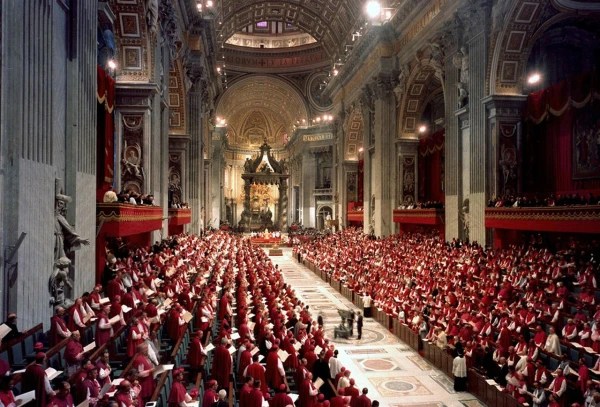
It’s been 75 years since Vatican II. Has the Church turned the page, or are we still reading the same chapter? Pope Francis has long been regarded as a progressive reformer, certainly the most progressive Pope since John XXIII, but what notable changes has he actually made during his pontificate?
He opened conversations on major issues, such as ordaining married men in remote regions and women as deacons, though neither led to concrete reforms. He allowed for the blessing of gay couples and permitted priests to offer the Eucharist to divorced Catholics without annulments, though none of these changes were formalized into official Church teaching. He also streamlined annulments, tackled Vatican finances, and infuriated his conservative foes with his crackdown on celebration of the Latin Mass. Yet, despite being criticized as being overtly progressive, Pope Francis has largely left the Church’s core doctrines untouched. This leads to the inevitable speculation: does he wish that more progress had been made, or does he hope those changes will come under his successor?
According to Philip Shenon, author of the book “Jesus Wept: Seven Popes and the Battle for the Soul of the Catholic Church”, Pope Francis joked that his successor should choose the name John XXIV–a nod to Pope John XXIII and the spirit of Vatican II reform. That name, of course, would signal a willingness to carry the torch of modernization further, avoiding any schism.
This leads to the inevitable question: will there be a Vatican III?
The newly elected Pope, Cardinal Robert Francis Prevost, the first ever American pope, will go by the name Leo XIV. He made his first balcony speech emphasizing unity and peace. The last pope to take the name Leo was Leo XIII (1878 – 1903), who authored the encyclical “rerum novarum”, or Rights and Duties of Capital and Labor, an open letter that addressed the condition of the working classes. “Leo XIII was a great Pope with social teaching.” said Kethleen Sprows Cummings, American studies and history professor at University of Notre Dame, “ it signals that our next Pope will continue in that vein”.
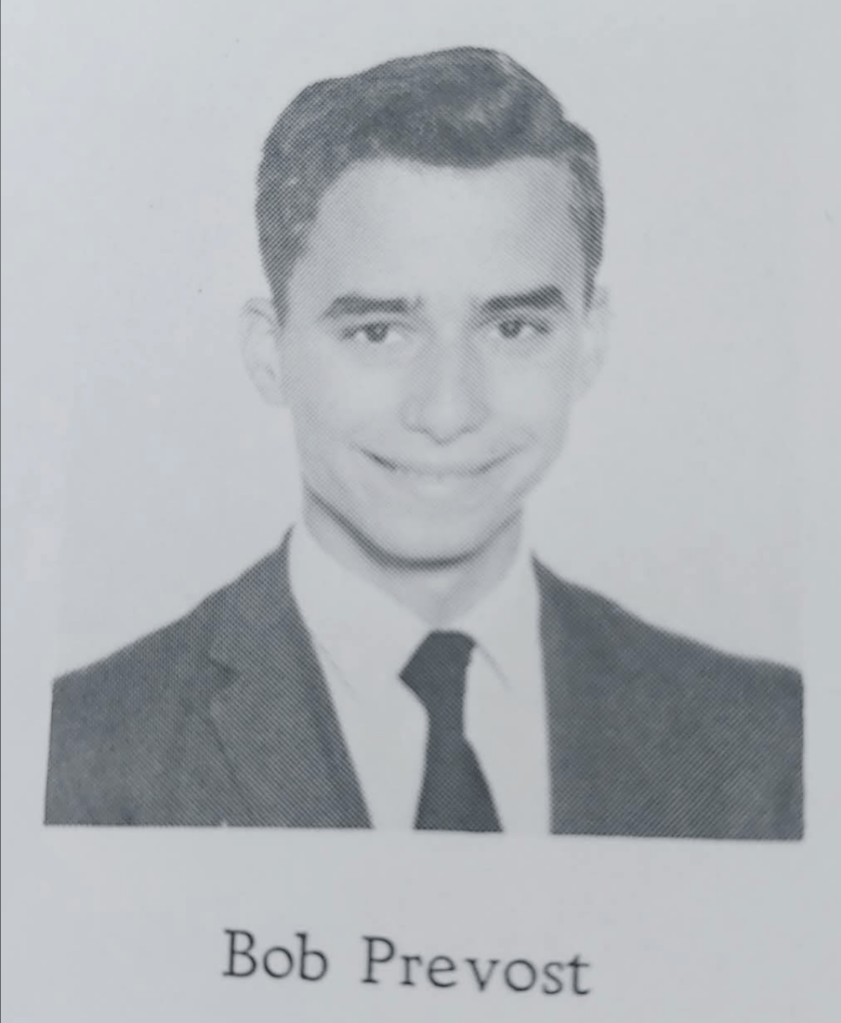
School yearbook of St. Augustine Seminary High School, Michigan
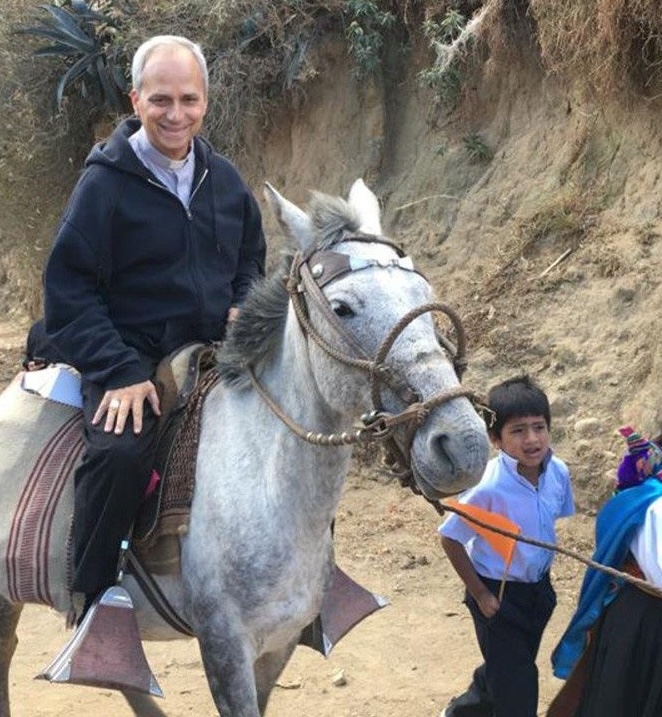
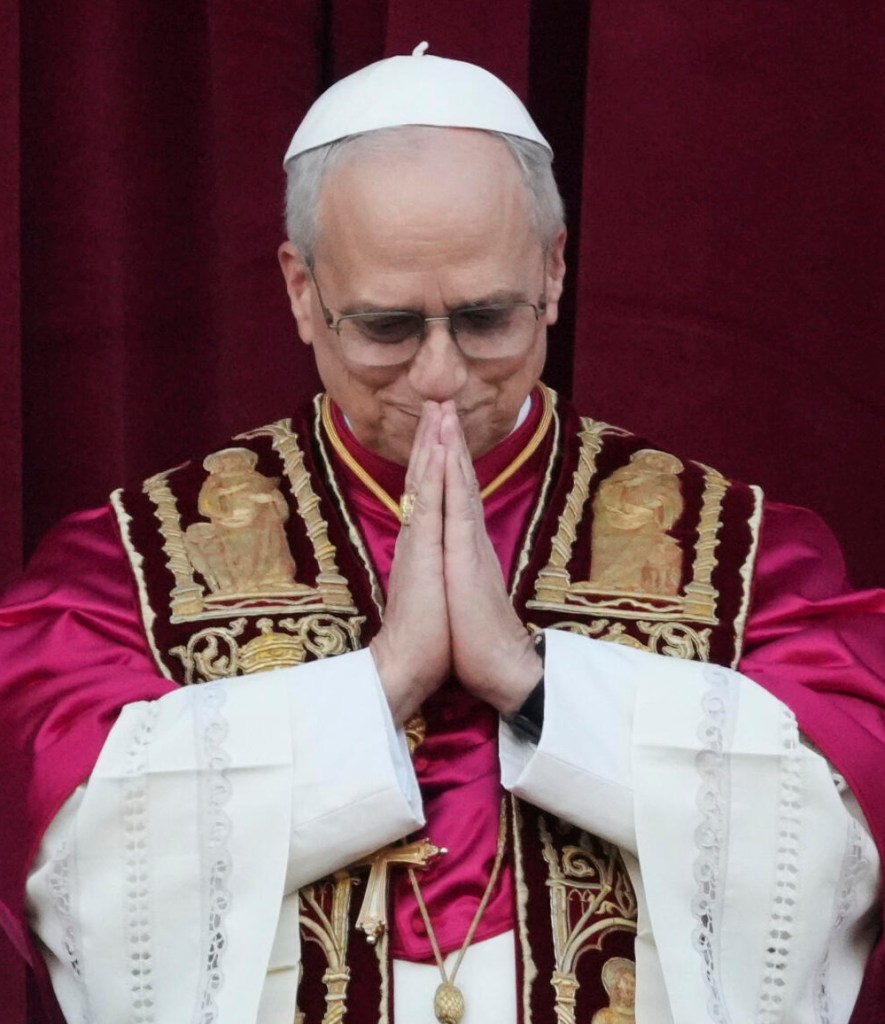
Cardinal Provost spent most of his priestly life in Peru, where he led Peruvian parishioners through the Civil war, authoritarian governments and numerous other challenges in two decades. Pope Leo’s Peruvian connections have led many to believe he will follow in his predecessor’s footsteps on issues like migration and inclusion.
Global debates erupted the moment the white smoke rose. Both progressives and conservatives found reason for hope. Pope Leo XIV’s social handle, @Pontifex, quickly became a trending buzzword. Meaning “bridge builder” in Latin, the name raises the question: is the bridge intended to connect with the LGBTQ+ community and other faiths, or to mend rifts within the Church itself?
As the world wrestles with political polarization, the Catholic Church grapples with a quieter but no less urgent crisis of its own: globally mass attendance is down and the number of young Catholics leaving the Church is growing. If trends continue, a Vatican III might not be a solution–but a triage.
However, the Church tends to move in centuries, not election cycles. Vatican II took decades to digest, and even today, some factions within the Church are still debating what it actually meant.
And that brings us to the ultimate irony.
The Final Irony
The pope reigns from the heart of Rome, in a palace atop a city state of 109 acres, commanding the spiritual attention of 1.4 billion people. And yet, he is both supremely powerful and profoundly limited. His voice can echo across the world–but must still pass through a centuries old filter of scripture and tradition, as well as bishops, priests, theologians, and his faithful followers.
As the smoke fades, we are left with the ultimate Catholic paradox: a Church knee-deep in ancient tradition that may only revive its relevance by adapting to the modern world, and a papacy vested with supreme authority—yet shackled by the very doctrines it exists to preserve.
 Youth Journalism Alliance
Leave a comment