

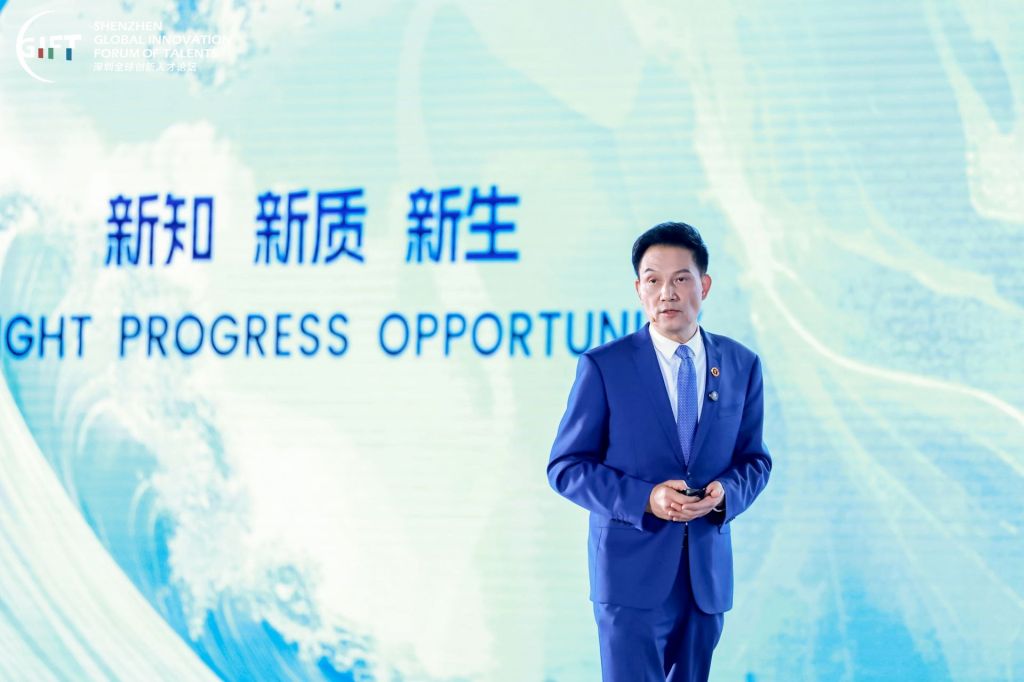
Making Waves and Moving Earth – Dr. Lin Jian’s Quest to Understand Our Dynamic Planet
Over the course of the years, few scientists have bridged the worlds of oceanography and earthquake research as seamlessly as Dr. Jian Lin. Over decades of exploration, analysis, and innovation, Dr. Lin has made profound contributions to understanding Earth’s dynamic systems. His work extends from the deepest trenches of the oceans to the tectonic stresses that shape the planet, unlocking knowledge with wide-ranging implications for science and society.
Recently, YJA co-founder Rory Hu and I had the privilege of sitting down with Dr. Lin for an in-depth conversation about his career, research, and the future of Earth sciences. It’s not every day that you get to chat with a scientist who has quite literally mapped the unknown, whether it’s the hidden landscapes beneath the ocean floor or the invisible forces that trigger earthquakes. As we settled in, I couldn’t help but marvel at the breadth of his work—spanning continents, disciplines, and decades. It was clear from the start that Dr. Lin’s passion for discovery was as vast as the oceans he studies.

Dr. Lin’s journey into science first began during his formative years in China, where his curiosity and academic aptitude were evident early on. As an undergraduate at the University of Science and Technology of China in Hefei, he elected to focus on geophysics, a field that examines the physical processes shaping the Earth.
At the time, his studies were centered on land-based phenomena such as earthquakes and tectonic shifts. These subjects fascinated him, given his personal experiences growing up in a seismically active region. It wasn’t until Dr. Lin pursued graduate studies at Brown University in the United States that his scientific interests underwent a profound shift. There, he had the opportunity to work closely with a mentor who specialized in marine geophysics — a subfield that focuses on understanding the geological and physical processes of the seafloor and the Earth beneath the oceans. This mentorship proved to be a turning point in his career.
Dr. Lin quickly realized that while much was known about the Earth’s continents, the oceans, which cover 70% of the planet’s surface, remained a vast, uncharted frontier. The seafloor held secrets about the Earth’s past, from the formation of new crust at mid-ocean ridges to the subduction of tectonic plates at deep trenches. “I was intrigued by the fact that we know so little about the ocean,” he recalls. “It felt like the perfect field to dedicate my research to.”
The oceans play a central role in sustaining life on Earth, yet much of their significance is often overlooked. They regulate the planet’s climate, provide critical resources, and serve as vital transportation routes for goods and people. For instance, nearly one-third of the oil used globally is extracted from the ocean floor. In addition to oil and gas, the seafloor contains valuable minerals that are becoming increasingly important for modern technology. The oceans also enable global trade, with about 80% of goods transported by sea — a far more economical option than air freight.
Beyond their economic importance, oceans are essential to environmental and national security. They act as a buffer against climate change, absorbing vast amounts of carbon dioxide and heat. “The ocean is vital in ways we often take for granted… yet, it remains one of the least explored parts of our planet.”
This revelation marked the beginning of a career dedicated to exploring the planet’s most remote and mysterious regions. Over the years, Dr. Lin has participated in and led expeditions across the Pacific, Indian, and Atlantic Oceans, each offering new insights into the dynamic processes shaping the Earth. He also extended his research to marginal seas, including the South China Sea and the Mediterranean, delving into the geological complexities of these smaller, yet equally significant, oceanic regions.
Through these experiences, Dr. Lin developed a deep appreciation for the interdisciplinary nature of oceanographic research. Studying the ocean requires expertise in geology, physics, chemistry, and biology, as well as the ability to navigate logistical challenges like deploying research equipment thousands of meters below the surface. Dr. Lin’s work exemplifies how collaboration and innovation are essential in unraveling the mysteries of the deep.
His early fascination with land-based geophysics and his subsequent pivot to marine studies have shaped a career that bridges these two domains. Today, Dr. Lin’s research not only enhances our understanding of the oceans but also connects them to broader Earth systems, highlighting their critical role in the planet’s geology, climate, and biodiversity.

While Dr. Lin’s later career would focus heavily on ocean sciences, his initial scientific inspiration came from a different force of nature: earthquakes.
Growing up in Fujian Province, China, Dr, Lin experienced the aftermath of the catastrophic 1976 Tangshan earthquake, which killed over 250,000 people. This event left an indelible mark on him as a teenager. Encouraged by his geography teacher, Dr. Lin joined an earthquake volunteer team in high school. Together, they conducted rudimentary yet meaningful observations, such as measuring water levels in wells and monitoring electrical conductivity between trees. These early experiences gave him a sense of purpose and curiosity that ultimately led him to pursue geophysics in college. “I was drawn to the hope that through science, we could one day forecast earthquakes and save lives,” he says. This desire to better understand seismic activity would later intersect with his work in ocean sciences, as many earthquakes occur beneath the sea. This connection between seismic activity and the ocean became a defining theme in his research, shaping his approach to both disciplines.
One of the most pressing challenges in geophysical studies is understanding and predicting earthquakes. Given their catastrophic potential, scientists have long sought ways to forecast these events. Dr. Lin explains that while true earthquake forecasting remains out of reach due to the complexity of Earth’s internal systems, significant progress has been made in earthquake early warning systems.
Unlike forecasting, which aims to predict an earthquake before it occurs, early warning systems detect earthquakes moments after they begin and rapidly relay alerts to affected areas. In countries like Japan, sensors placed underwater and along fault lines can detect seismic activity and transmit data instantaneously through automated networks. This allows residents to receive warnings on their devices seconds before the earthquake waves arrive, potentially saving lives by giving people enough time to take cover or evacuate hazardous areas.
“Scientists have made progress in the last decade or so with earthquake early warning,” Dr. Lin notes. “For example, if an earthquake occurs offshore near Tokyo, our sensors can detect it immediately and send out warnings before the seismic waves reach the city. That delay—sometimes just a few seconds—can make a significant difference in reducing injuries and fatalities.”
While early warning systems continue to improve, true earthquake forecasting remains an unsolved challenge. Dr. Lin highlights the difficulties in predicting earthquakes due to the limited ability to observe the Earth’s deep interior. Drilling into the Earth to gather data is incredibly expensive, and most of our understanding comes from surface-level instruments like seismometers and satellites. Despite this, new technologies offer hope.
“We are now training artificial intelligence to analyze vast amounts of seismic data,” Dr. Lin explains. “AI has the potential to act as a million seismologists, detecting subtle patterns in seismic activity that humans might miss. In the future, AI could help us move closer to earthquake forecasting, giving communities critical time to prepare.”
This intersection of technology and geophysics represents a promising future in disaster preparedness. As early warning systems become more advanced and AI-driven models continue to improve, the hope is that one day, science may finally unlock the ability to predict earthquakes before they strike.
 Youth Journalism Alliance
Leave a comment