

Editor’s Pick

Humanitarianism: A Journey of Two Worlds
The world today is divided. And I don’t just mean politically – people like me live in a world where we worry about our school grades, fuss over our appearance, and throw a fit when we get a birthday present we don’t like. Through the tiny window of a viral social media video, we might ever so often catch a glimpse of another world, far away, affected by war, natural disasters, or economic collapse. It’s a world where people face starvation, lack access to education, and may not live long enough to ever receive a birthday gift. These two worlds, ours and theirs, are disjointed, drifting further apart as geopolitical tensions rise ever higher today. Their world is stricken with crises. And our world seems unaffected…or does it? We feel devastated at first when the news of crises breaks. Then we forget and move on, changing the TV channel or scrolling to the next TikTok. After all, what does their suffering have to do with us?
Everything, according to Joyce Msuya, the UN Assistant Secretary-General of Humanitarian Affairs, in her interview with the Youth Journalism Alliance (YJA). She is convinced that “we as human beings have more in common than in difference.” Najwa Mekki, communication director at the United Nations Office for the Coordination of Humanitarian Affairs (OCHA), echoes Msuya’s sentiment: “It doesn’t matter if you live in an industrialized or developed country or if you live in a developing country. At the end of the day, a child is still a child, a mother is still a mother, a father is still a father, a person with a disability would still face similar challenges.” They both believe that contrasts between races, cultures, or other factors grow trivial when looking at humanity as a whole. We should care about the suffering of our own species, no matter how different they may seem. In the end, we are all human.

Illustrated by Rory Hu
It’s beliefs like this that propel a group of people, the humanitarians, to work hard to bridge and connect the two worlds. Although often unnoticed, this group isn’t small. It’s huge. It’s a vast network of government organizations, NGOs, the private sector, individual humanitarians, and more. They operate quietly behind the scenes, only coming into the spotlight during major global crises such as the recent conflicts surrounding Gaza and Ukraine. Only then do we catch a glimpse of their work. Despite quickly losing public attention, they continue to work quietly and off the radar. But they never stop, like clockwork ticking behind the glass.
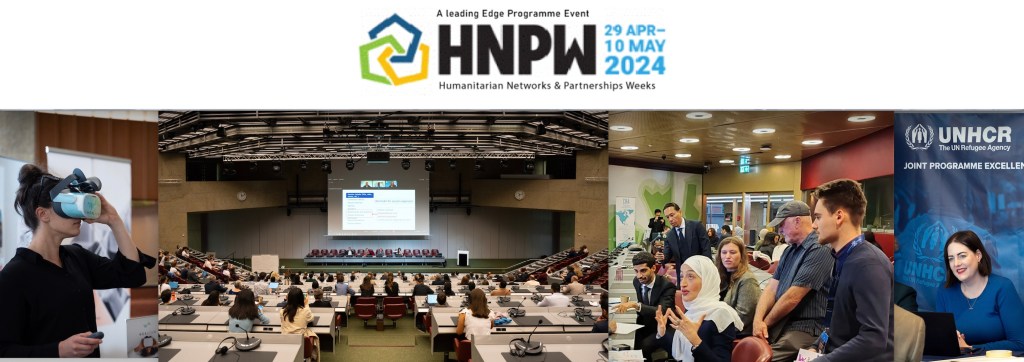
What better way to explore the intricate workings of humanitarian efforts than to peek behind the watch face? With this in mind, Mia and I decided to attend OCHA’s Humanitarian Networks and Partnerships Weeks, an annual two-week hybrid conference in Geneva. Bringing together organizations and individuals from around the world, HNPW offered the ideal opportunity to gain deeper insights into the humanitarian sector. From April 29th to May 10th, we attended multiple HNPW sessions and had the honor of interviewing three female leaders at OCHA: Mekki, Msuya, and Lisa Doughten, OCHA’s Financing and Partnerships Director. Before diving in, we had three key questions: how was humanitarian aid established? What does the sector do now? Most importantly, what factors will define humanitarian aid in the future?
The History of Humanitarianism

Illustrated by Rory Hu
Joyce Msuya’s words – that humans have more in common than in difference – parallel a quote popularly attributed to Socrates: “I am neither Athenian nor Greek, but a citizen of the world.” Although the humanitarian sector looks drastically different today, this core principle has never changed since humanitarianism’s inception. Indeed, modern humanitarian principles can be traced all the way back to Greco-Roman times. Roman author Cicero describes the concept of universi generis humani societas, or that all people, in the end, belong to the same community: that of humankind. Cicero’s thoughts marked the beginning of seeing and treating both friends and enemies as human. It was an integral step towards the principles of neutrality and impartiality today: enemy or friend, a human is a human and deserves to be saved.
The seeds of humanitarianism, sown by Socrates, Cicero, and other ancient philosophers, are evident in Greco-Roman writings that outlined the proper treatment of prisoners and enemies during wartime. Centuries later, after witnessing the atrocious treatment of prisoners at the Battle of Solferino, Henri Dunant, a Swiss businessman, carried on the torch of humanitarianism. He brought to life the revolutionary principle of neutrality: humanitarians should be unbiased, assisting all individuals regardless of their side in a conflict. Dunant’s work, a huge leap upwards in humanitarianism, laid the foundations for the more formal decrees set by the Geneva Convention. His condemnation of conditions at Solferino was the catalyst for the creation of the International Committee of the Red Cross (ICRC) in 1863, which is largely regarded as one of the first formal humanitarian aid organizations. Slowly but surely, the aspects of humanitarian aid began to fall into place. The Northern Chinese Famine of 1876-1879 gave birth to the first formal international relief fund, marking the start of monetary aid and the rise of finance in humanitarian affairs. After the World Wars, which spurred the creation of the League of Nations and subsequently the UN, the humanitarian sector experienced unprecedented growth. OCHA was established by the General Assembly in 1991, and growing branches of the UN were accompanied by the creation of various humanitarian organizations around the world. Doctors Without Borders was founded in 1971, and the World Central Kitchen was created in 2010. The humanitarian sector skyrocketed in size, with total funding rising by over 20 billion dollars in the span of just 20 years.
Although youth appeared relatively late in humanitarian history, they are certainly not a group to be ignored. One of the first recorded youth humanitarian actions was a play by six children in 1884 that raised fifty dollars for humanitarian aid. World War I spurred the founding of the Junior Red Cross: youth could participate in growing vegetables for the nation, also known as Victory Gardens, and sent supplies to fellow students overseas. In total, Junior Red Cross members raised over 3 million dollars, an impressive feat, for the Red Cross during World War I. Today, the American Red Cross offers local clubs and a volunteer program to young humanitarians interested in making a difference. Beyond the Red Cross, young humanitarians today are advocating and raising awareness for critical causes such as climate change. These activists embody the spirit of humanitarianism, showcasing just how far the concept has progressed since ancient civilization.

Humanitarianism Today
Even though the core principles of humanitarian aid remain the same, the sector has, with the advancement of technology, evolved greatly and adopted many innovative approaches. One such approach is anticipatory action. While aid has historically been reactive, responding to crises after they have occurred, anticipatory action predicts humanitarian disasters and works to prevent them. According to Lisa Doughten, anticipatory action is “really trying to address the need before

Illustrated by Rory Hu
it happens.” To illustrate the idea, she shared a number with us: 14. The number of minutes it took for funds to be provided to a flooded area. When the waters rose, aid arrived…a mere 840 seconds later, compared to hours or even days in the past. According to Doughten, 70% of anticipatory action is financed by the global Central Emergency Response Fund, or CERF, which Doughten has overseen as former CERF Secretariat and later the Chief of the Pooled Fund Management Branch. Doughten has devoted herself to making humanitarian assistance more effective, including by making funding to CERF more efficient over the years.
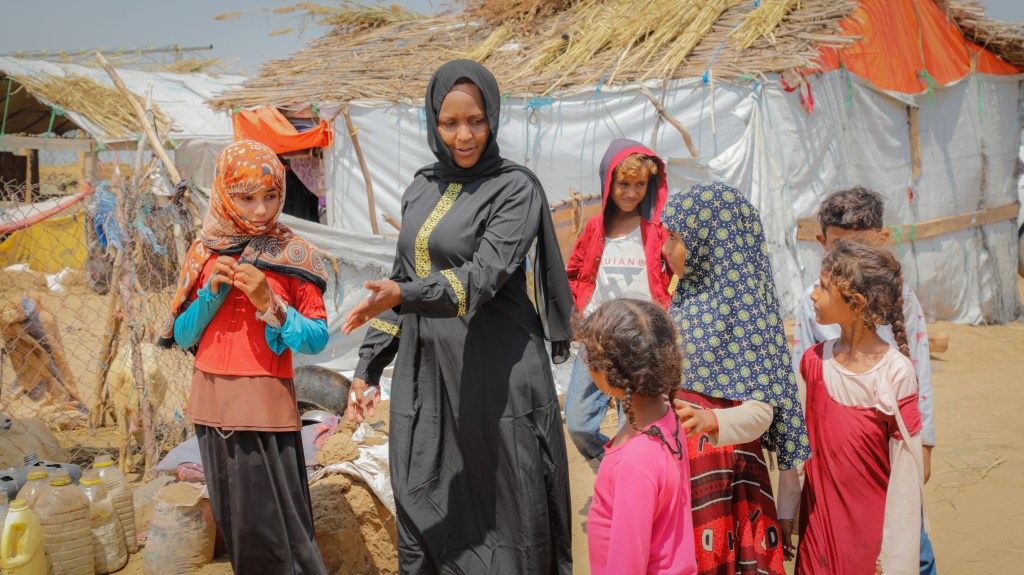
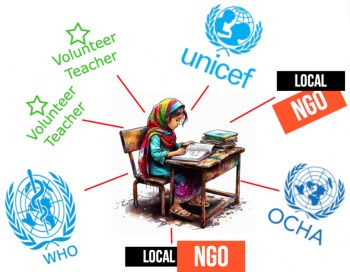
Beyond innovations in methodology, humanitarianism today has vastly expanded in scope and scale since Dunant’s time. Aid in the past was divided and disjointed: different organizations often carried out the same actions or overlooked areas of need, leading to inefficient resource allocation and even failed efforts at times. In recent years, however, these scattered initiatives have joined together. ASG Joyce Msuya told us about how the humanitarian sector has advanced via global collaboration between organizations. She referenced specifically the situation in Yemen, where a civil war has caused the trauma and displacement of many families. The WHO provides medical care to children affected by the conflict, and a local NGO oversees education and mental health initiatives to give kids a space to learn, grow, and play. Most of the teachers are volunteers from the local community who work together with UNICEF, which funds the expansion of facilities and programs around the project. These various organizations are collaborating to aid children in Yemen, providing an example of how the humanitarian sector is working together in war zones to build a future for affected people. Msuya’s story opened our eyes to how much the scale of humanitarian aid has grown. This type of collaboration exemplifies the cluster system the sector has established in recent years, an effective and targeted solution to complex issues. The scope of modern aid is far beyond simply treating wounded soldiers as it was in the past – now, it’s about rebuilding foundations for generations of lives to come.
Illustrated by Rory Hu
Compared to the past, the most significant advancement in humanitarian aid today is communication. The unprecedented scale of global collaboration between different organizations relies on this capability. In addition to coordination within the humanitarian sector, communication with affected communities and the public is equally crucial for successful aid. In the past, humanitarian aid was often sent based on the assumption of need. OCHA has now adjusted their strategy to include local NGOs in the decision-making process to ensure necessary help for affected people. Doughten stressed that “we work with the communities, we listen to what they need, which is a more dignified way of providing the assistance.” Regarding communication with the public, Mekki highlights youth advocacy, suggesting that young people could play a pivotal role in raising awareness about humanitarian issues. She believes that “the work of young people on the climate crisis for me is a textbook case of how young people can drive change in extremely meaningful ways.”

Humanitarianism in the Future
From the past to the present, humanitarian aid has undoubtedly grown bigger, with an expansion in scale and scope driven by unprecedented global collaboration.
Photograph by Andy Dean Now, as we race to the future, aid is getting smarter. New technology such as drones, robots, or AI can improve the efficiency of aid and solve key problems the sector faces today. AI could analyze risks and predict scenarios to assist with anticipatory action, or reconstruct organization systems to streamline communication and resource distribution. Furthermore, AI can be used to tackle one of the biggest issues that obstruct humanitarian efforts: misinformation. Najwa Mekki notes that “there’s a lot of places where disinformation, misinformation…can affect the work that we do, it can affect the safety of our teams, and it can affect also the communities themselves…it’s something that…we are increasingly paying attention to and trying to figure out how best to address.” GANNET, an AI system spotlighted during an HNPW session, offers a solution to misinformation in humanitarian communication. Its algorithm, designed to present accurate and real-time information on humanitarian crises, helps to detect and weed out misinformation, gathering data from reliable sources to present the most factual picture possible.

In addition to detecting disinformation, technology can assist with research and data collection in remote areas – Msuya recalls a recent trip to Mozambique in support of local partners using drone technology to identify early signs of cyclones. Before natural disasters hit communities, drones are able to provide early warnings, allowing humanitarians to evacuate locals prior to a cyclone’s onslaught. Msuya, a microbiologist herself, was eager to discuss new technology given her own involvement in science, and was excited for the possibilities of further bridging science and humanitarianism in the future.
With technological innovations gaining prevalence in humanitarian aid, the future of humanitarianism is certainly in the hands of the youth. They hold the keys to technology, science research, and social media. Growing up in a digital age, young people are better acquainted with and equipped to handle new technology. They can deftly navigate the digital world with a fresh, creative perspective to revitalize and modernize humanitarian aid. Hand-in-hand with this digital familiarity comes the young generation’s work in scientific research. The Pew Research Center reports that the number of STEM bachelor’s degrees awarded grew by 62% from 2010-2018, in comparison to 20% for all degrees. As STEM graduates surge in the young generation, youth can apply innovative techniques for cutting-edge research given their experience as “digital natives”. Beyond applying digital skills to science research, the young generation can improve humanitarian communication with the public by utilizing social media, a communication platform they have greater influence over than adults. Youth could start viral campaigns to raise awareness about key humanitarian issues. Meanwhile, youth in affected populations could be trained to start their own humanitarian initiatives, opening up learning programs with their peers and assisting others within their community. Over time, this could increase resilience within affected communities and reduce dependence on external aid, in turn lessening the pressure on the humanitarian sector to respond to so many crises.
The humanitarian sector undoubtedly faces many challenges: misinformation, humanitarian access, lack of funding, global conflict…the list goes on and on. For humanitarians, the expansion of the sector is “a sad development because it reflects the increased suffering,” according to Jens Laerke, OCHA’s Geneva spokesperson. Advancements in humanitarian aid are not celebratory ones—humanitarians would altruistically rather be out of work if it meant the absence of crises that the sector targets. Despite this, we were invigorated by the spirit we witnessed at HNPW and beyond. From Greco-Roman philosophy to Dunant’s cry against the suffering of soldiers to the global system of humanitarian aid today, we have been inspired by the exponential development the humanitarian sector has seen to respond to the growing needs in the world. Although it is bittersweet, we are excited for where the sector will go in the future. Msuya, too, is excited for what youth in particular will bring to the table: “if I look at your generation compared to ours, you’re much more united.” We hope that our generation can truly show our unity by bringing our digital prowess to the humanitarian sector. Perhaps with the help of youth, the humanitarian sector will one day be able to bridge the two worlds: one of humans…and the other of humans too.

 Youth Journalism Alliance
Leave a comment